Mattress Buying Guide
Naturepedic Mattress Materials: What to Compare Before Choosing
A mattress can look simple from the outside, but the materials inside it shape its feel, support, temperature, care needs, and long-term performance. When comparing Naturepedic mattresses, take a closer look at the full construction—not just the label, the firmness description, or a headline certification.
The right choice depends on what feels comfortable to you, how you sleep, what your bed frame can support, and which product details matter most in your home. This guide explains how to compare those details methodically, with a practical checklist for making a more informed decision.
Start with the complete construction
Two mattresses may share a brand name or a similar description and still feel quite different. Each model can use a distinct combination of comfort layers, support components, cover fabrics, and internal construction. Begin by finding the exact model and size you are considering, then review its current specifications. A broad statement about a product line is not a substitute for details about the particular mattress.
It helps to think of a mattress as several working parts. The comfort layer is closest to your body and influences the first impression when you lie down. Beneath it, transition materials can soften the change from the top of the bed to its deeper support. The core or support system carries body weight and contributes to the mattress’s overall stability. The cover encloses the construction and affects the surface feel, breathability, and cleaning instructions.
Specifications may identify materials by name, describe their location, or give their thickness. Record what you find rather than relying on a single phrase such as “natural,” “organic,” or “supportive.” Those words can be useful starting points, but they do not tell you exactly how a mattress is built or whether its feel matches your preferences.
- Comfort layers: Note the materials, thickness, and order of the upper layers.
- Support system: Identify the type of core or support structure and how the manufacturer describes its role.
- Cover: Check the listed fibers, any treatments or finishes, and whether the cover is removable or washable.
- Construction details: Look for information about quilting, seams, internal barriers, and how the layers are assembled.
- Model and size: Confirm that the specifications apply to the exact version you intend to buy.
When information is missing, treat that as a question to resolve before deciding. A retailer or manufacturer can clarify whether a listed material is used throughout a model or only in a particular layer, and whether the construction varies by size or configuration.
Understand how materials influence feel
Material names are only part of the story. Thickness, density, layering, and the way components work together can change how a mattress responds. Even familiar materials can feel different depending on their placement and construction. That is why comparing a specification sheet with your own comfort preferences is more useful than trying to rank materials in the abstract.
The upper layers are often the first things you notice. A surface that gives readily may feel more cushioning to one sleeper, while another may prefer a firmer, more buoyant sensation. The support system beneath those layers can affect how much the bed settles under the body and how stable it feels when you move. A mattress that feels welcoming for a few minutes in a showroom may feel different after a full night, so consider both initial comfort and the support you need over time.
Pay attention to the words used to describe feel, but do not assume that “plush,” “medium,” or “firm” means exactly the same thing across brands or models. Firmness is experienced personally. Body shape, sleep position, sensitivity to pressure, and even the foundation underneath the mattress can influence perception. If possible, test the specific model in person and spend enough time lying in your usual sleep position to get beyond a quick first impression.
Temperature is another part of comfort. The mattress’s construction, cover, bedding, room conditions, and individual sleep habits all contribute to how warm or cool the bed feels. Look for clear information about fabrics and materials, but be cautious of promises that imply a material will produce the same temperature experience for everyone. If you tend to sleep warm, compare the full setup—including mattress protectors and sheets—rather than focusing on one component alone.
Motion and sound can matter, too, especially for people sharing a bed. Consider whether the support construction is described as responsive, stable, or designed to limit disturbance, and verify those claims through current product information or an in-person test. If one person changes position frequently, testing together can reveal more than either sleeper’s impression alone.
Match the mattress to your sleep position
Sleep position is a helpful comparison tool, not a rigid rule. Side sleepers often pay close attention to cushioning around the shoulders and hips, while back sleepers may prioritize an even, supported feel through the torso. Stomach sleepers commonly want to consider whether the surface allows the midsection to sink more than they prefer. Combination sleepers may value a mattress that feels comfortable through several positions and permits easy movement.
These are starting points, not promises about which Naturepedic model—or any mattress—will suit a particular person. Comfort is individual, and a firmness label cannot account for every body or preference. If you share a bed, each person should assess the mattress in their normal position. Discussing the trade-offs before buying can help prevent one sleeper’s priorities from becoming the other’s nightly frustration.
Think about pressure and alignment in practical terms. Do you feel concentrated pressure at the shoulders or hips? Does your lower back feel comfortably supported when you lie in your usual position? Can you change positions without feeling stuck? A brief store visit cannot reproduce every night at home, but these questions can make a test more intentional. If you are shopping online, review the trial, return, and exchange terms before purchase so you understand how a longer evaluation works.
Read certification claims carefully
Certifications can help shoppers evaluate specific materials or manufacturing criteria, but the word “certified” by itself is incomplete. Find out which organization issued the certification, what standard it covers, and whether it applies to the finished mattress, a particular material, or a component such as fabric or fill. Certification scope matters: a credential for one ingredient should not be assumed to cover every part of the product.
Check the current certificate or certification directory when available. Confirm the product name, model, and relevant component, and look for the certification’s scope and validity. Standards can differ in what they assess, and a certification should be understood according to its published criteria rather than treated as a universal guarantee about safety, performance, or environmental impact.
Terms such as “organic,” “natural,” and “non-toxic” may have different meanings in different contexts. Ask what material the term describes and what documentation supports the claim. For organic content, for example, verify which fibers or ingredients are covered and whether the claim applies to the finished product or only to selected components. For emissions or chemical testing, determine what was tested, by whom, and against which standard.
It is also reasonable to distinguish a company’s own product description from independent verification. Manufacturer information is useful for understanding construction and intended features; third-party documentation can offer another layer of context. Neither replaces your own review of comfort, care instructions, product policies, and suitability for your bed setup.
Certification questions to ask:
- Which exact material or product component is covered?
- What standard or criteria does the certification address?
- Is the certification current and traceable to the model being considered?
- Does the claim apply to the whole mattress or only part of its construction?
- Can the seller provide documentation or a source for checking the claim?
Check care instructions before purchase
A mattress is a long-term household item, so routine care deserves a place in the comparison. Read the manufacturer’s instructions for cleaning, rotation, protection, and handling. Some covers may be designed to remain in place, while others may have different care requirements. Never assume that a cover is removable or machine washable unless the product documentation says so.
Ask what to do about spills and stains, which cleaning products are permitted, and whether moisture could affect the materials or warranty. If a mattress needs spot cleaning, follow the stated method rather than applying a general cleaning tip from another product. Excessive moisture or unapproved treatments can damage components and may complicate a later warranty claim.
Also review the recommended use of a mattress protector. A protector can help guard against everyday spills and debris, but its fabric and construction can change the surface feel or temperature. If you are sensitive to texture or heat, consider how the protector, sheets, and comforter will work with the mattress rather than evaluating the mattress in isolation.
Find out whether the mattress should be rotated, and if so, how often and in which direction. Do not assume it can be flipped; many mattresses are designed with a specific top and bottom. Clear care instructions can help maintain the intended orientation and make it easier to keep the sleep surface in good condition.
Make sure your bed frame is compatible
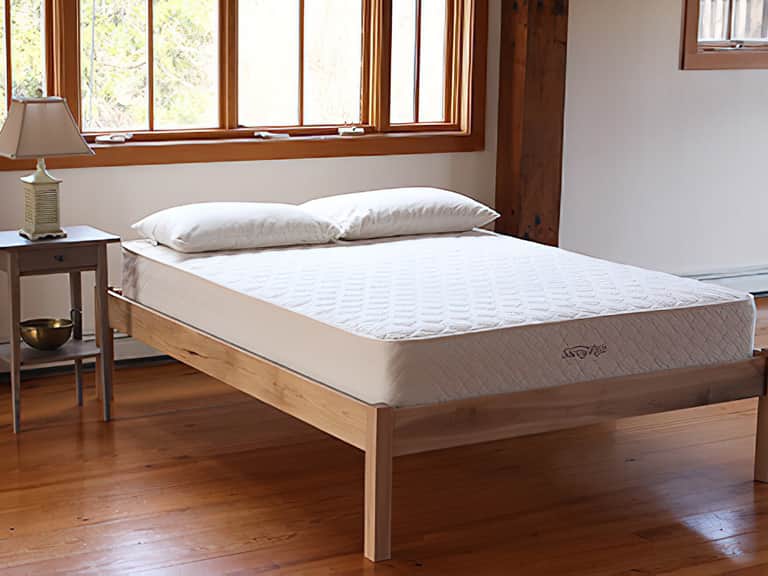
The foundation below a mattress is part of the sleep setup, not an afterthought. Before choosing a model, confirm the manufacturer’s requirements for slats, a platform, a foundation, or an adjustable base. Check the permitted support type, slat spacing, center support needs, and weight limits where those details are provided. A mattress used on an unsuitable foundation may not perform as intended, and improper support could affect warranty coverage.
Measure the frame and room, then compare the mattress’s actual dimensions with the available space. Standard size names are useful, but it is sensible to verify measurements, especially if the bed frame is older, nonstandard, or built for a particular mattress profile. Consider mattress height as well: it influences how easy the bed is to enter and exit, how sheets fit, and how the finished setup looks beside a headboard or nightstand.
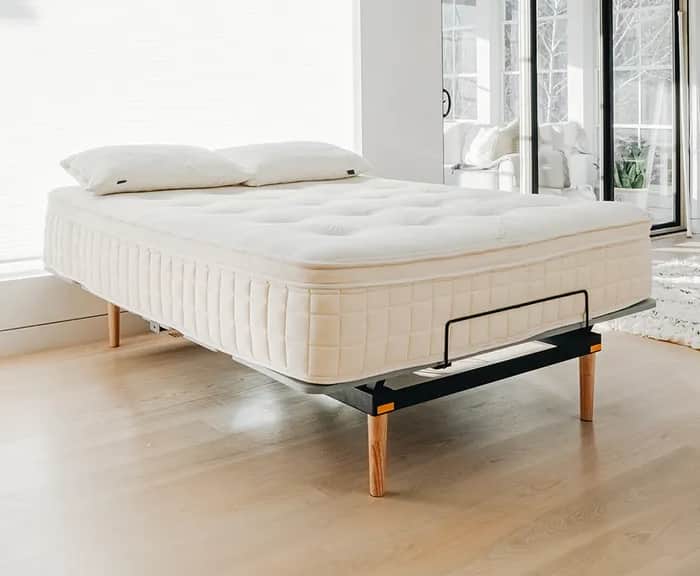
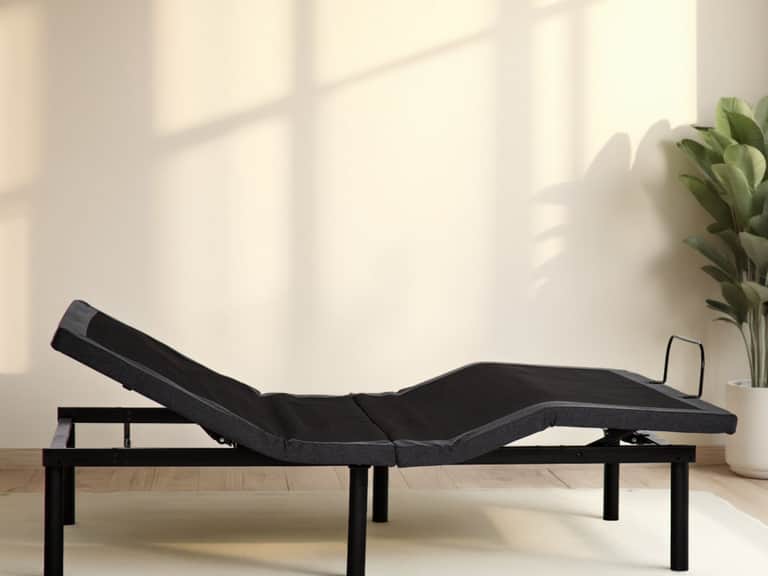
If you have an adjustable base, check explicit compatibility rather than assuming that any mattress can bend or move with it. Review guidance on the base’s permitted mattress type and dimensions, and confirm whether using an adjustable frame changes any care or warranty requirements. A related but separate consideration is the base’s own feature set: for example, the Naturepedic Conductor Adjustable Bed Frame is an adjustable foundation, not a mattress. Its presence in a sleep setup does not replace the need to choose a compatible mattress and check both products’ specifications.
Compare policies as carefully as materials
Specifications tell you what a mattress is made of; purchase policies explain what happens if the choice is not right for you. Review the trial or return period, any fees, pickup arrangements, exchange limits, and condition requirements. Make sure you understand when the evaluation period begins and whether the seller requires a minimum break-in period before accepting a return.
Read the warranty in full enough to understand its coverage and exclusions. Look for the duration, what counts as a covered defect, how claims are evaluated, and what proof may be required. A warranty is not necessarily a comfort guarantee, and normal changes in feel may be treated differently from a manufacturing defect. Keep order records and follow care and foundation instructions so you have the relevant information if a question arises.
Compare delivery details, too. Ask whether the mattress arrives compressed, how it is brought into the home, and whether old-mattress removal is available. Check any unpacking or setup instructions and allow for the manufacturer’s stated expansion or use guidance. Practical logistics may not make a mattress more comfortable, but they can shape the experience of getting it into the right room and onto the right foundation.
A simple comparison worksheet
When reviewing several Naturepedic mattresses, put their details side by side. This can keep a memorable feature or appealing phrase from overshadowing a more important difference. Use the same questions for each model and note any information you still need to verify.
- Model and size: What exact product and dimensions are under consideration?
- Layer materials: What are the comfort, transition, and support components?
- Feel: How is the surface described, and how did it feel in your normal sleep positions?
- Temperature and movement: What does the construction suggest, and what can you confirm through testing?
- Certifications: Which components are covered, and where can the current documentation be checked?
- Care: What are the cleaning, rotation, and protector instructions?
- Foundation: What support types are permitted, and are there spacing or compatibility requirements?
- Policies: What are the trial, return, delivery, and warranty terms?
- Open questions: Which claims or specifications need confirmation from the manufacturer or retailer?
This worksheet is especially useful when two mattresses appear similar at first glance. A difference in one material may matter to you; a difference in return terms may matter even more. The goal is not to select the model with the longest feature list, but to identify the one whose verified construction and practical conditions align with your priorities.
Common comparison mistakes to avoid
One common mistake is choosing on a single claim. A certification, a particular fiber, or a “natural” description may be important, but it does not automatically establish comfort, durability, or suitability. Treat each claim as one piece of evidence and check what it actually covers.
Another is relying only on a firmness label. Labels can help narrow the field, but they do not reproduce the experience of sleeping on a mattress. Whenever possible, test the exact model. If that is not practical, study the trial terms and make a plan to evaluate the mattress at home in your usual positions.
It is also easy to overlook the foundation. A mattress that is a promising match on paper still needs appropriate support. Confirm compatibility before purchase, rather than after delivery, and account for any bed-frame measurements or limitations in the room.
Finally, avoid assuming product information stays unchanged. Specifications, certifications, policies, and available sizes can be updated. Recheck details close to the time of purchase, and save a copy of the information and terms that applied to the model you ordered.
The bottom line
Choosing among Naturepedic mattresses is easier when the comparison starts with specifics: the materials in each layer, the construction as a whole, the way the mattress feels in your sleep position, and the care and foundation requirements. Then consider certifications in context by verifying which components they cover and what standards they represent.
Give equal attention to the details that come after the product description: cleaning guidance, trial and return conditions, warranty terms, delivery, and compatibility with your current bed frame. These practical checks can help you avoid surprises and understand what you are agreeing to before the mattress arrives.
No single material name or marketing phrase can predict whether a mattress will feel right night after night. A careful review of current specifications, paired with a realistic assessment of your comfort needs, gives you a clearer basis for choosing. Compare like with like, ask for clarification when information is incomplete, and make the decision around the sleep setup you actually have.